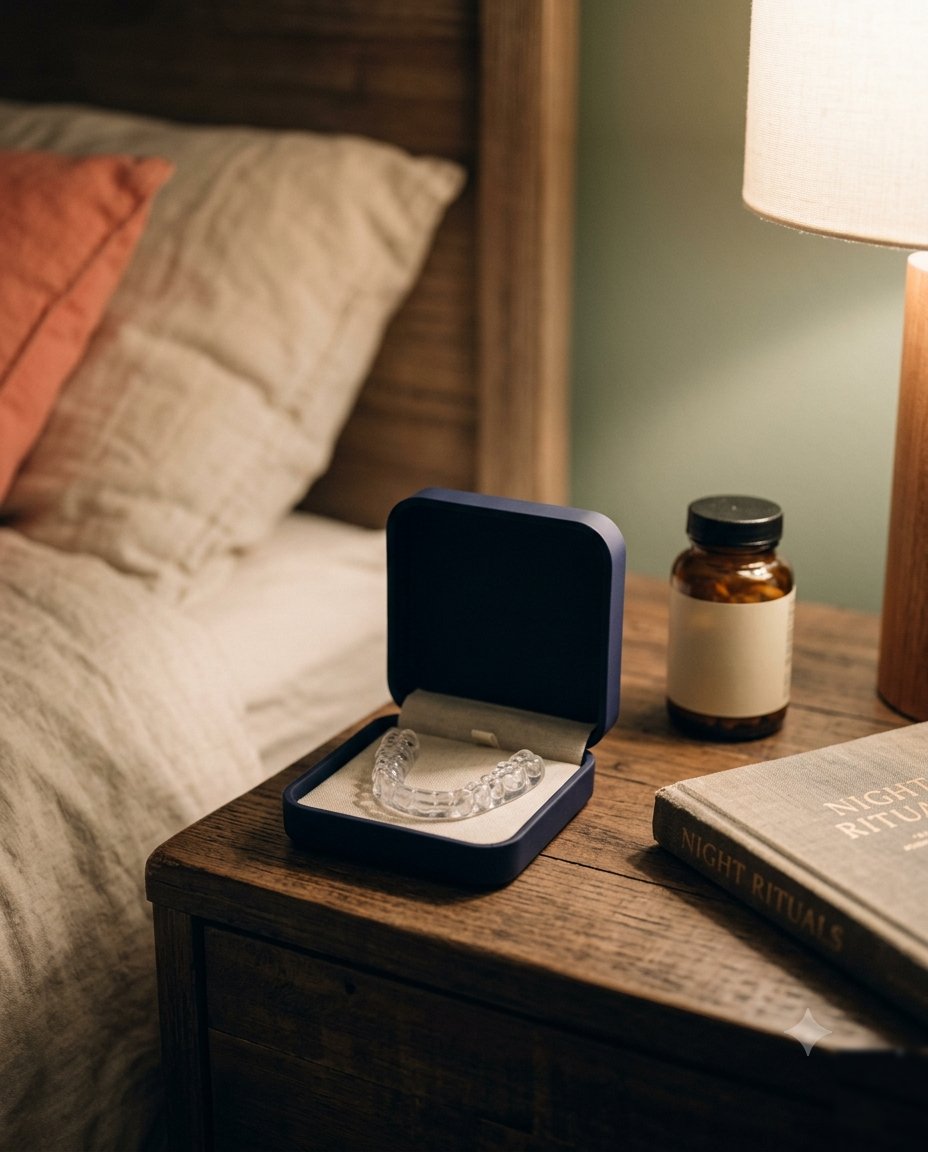
The daily routine (60 seconds)
Rinse the guard under cool running water as soon as you take it out — before saliva and plaque dry onto it. Brush it gently with a soft toothbrush kept for that purpose only, using clear washing-up liquid or a mild soap rather than toothpaste. Then let it air-dry completely on a clean surface before it goes back in its case. A damp guard in a closed case is how odour and biofilm start.
The weekly deep clean
Once a week, soak the plate for 15–30 minutes in a purpose-made appliance cleaner (effervescent retainer or denture tablets, made up with cool or lukewarm water). Rinse thoroughly afterwards. A weekly soak keeps a plate genuinely clear rather than slowly clouding, and it addresses the film brushing alone doesn't shift.
What never to use
- Hot or boiling water — the single most common way people destroy a custom plate. Heat warps the material and your precise fit is gone permanently. Never wash it in the dishwasher, never leave it on a radiator or a sunny windowsill, never leave it in a hot car.
- Toothpaste — most are abrasive. Micro-scratches dull the surface and give bacteria somewhere to live.
- Bleach, alcohol or harsh household cleaners — these degrade appliance materials and are not safe to put back in your mouth.
- Mouthwash for soaking — alcohol-based mouthwashes can cloud and embrittle the plastic.
Storage, and the mistakes that cost people plates
Store it dry, in its ventilated case, away from heat. Two genuinely common ways plates die: wrapped in a tissue at breakfast (they get thrown away — this is the number one cause of lost guards), and left where a dog can reach them — dogs are drawn to the smell, and a chewed guard is a replacement, not a repair.
When cleaning isn't the answer
If your plate has gone permanently cloudy, smells even after a deep clean, has visible cracks or stress lines, or no longer seats the way it used to — that's a replacement conversation, not a cleaning one. A cracked plate concentrates force rather than spreading it, which makes it worse than useless.
Never wear through again
Our replacement plans keep your scan on file and post a fresh plate every six months — Day Plate £79, clinical-grade Hard £99 per cycle.
See the plans →When to seek care instead of self-treating: if your jaw locks or clicks painfully, if headaches are new, severe or worsening, or if you've had recent facial trauma, see a clinician first. Our consultation screens for exactly these and will route you to clinical care rather than sell you a device.