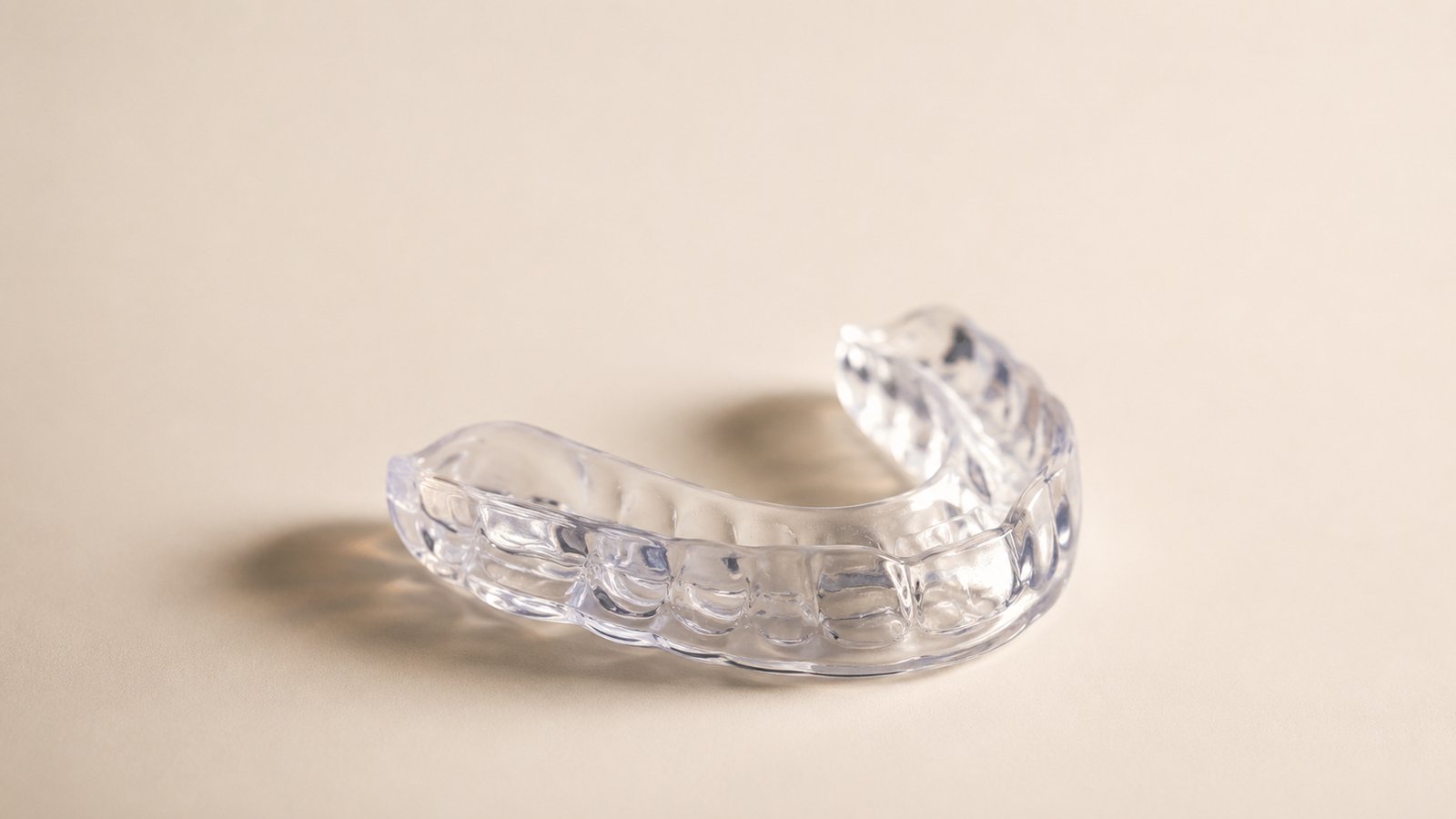
The short version
Soft suits light-to-moderate clenchers who prioritise comfort. Hard suits regular and heavy grinders, and anyone with crowns, veneers or extensive dental work. If you're genuinely unsure, hard is the more protective choice — and it's what our dentists recommend for most people who grind regularly.
Soft guards: comfortable, but there's a catch
A soft guard is made from flexible material — cushioned, forgiving, and the easier of the two to get used to. That comfort is real and it matters, because a guard you don't wear protects nothing.
The catch is twofold. First, durability: heavy grinders chew through soft material, sometimes within months. Second — and this is the part people don't hear often enough — some clenchers bite harder against a soft surface. Chewing into something yielding can encourage the muscles to work rather than rest, which is the opposite of what you want. For light clenchers this rarely matters; for heavy ones it can.
Hard guards: the protective standard
A hard guard is rigid acrylic. It doesn't invite chewing, it resists wear far better, and it distributes force across the whole arch rather than letting it concentrate. It's the build most commonly used clinically for genuine bruxism, and it's the right answer if you have restorations to protect — because replacing a cracked crown costs many times what the guard did.
The trade-off is adaptation: a rigid plate feels more present for the first few nights. Almost everyone adjusts within a week or two.
When neither is enough
If you've broken hard guards — more than once — you're past the standard range entirely. That's a different engineering problem, and it's what our reinforced Ultra Plate exists for.
What actually decides it
Grinding force, dental work, and comfort tolerance — in that order. That's exactly what our assessment asks about, and why we prescribe the build rather than asking you to guess at a material, which is what mail-order trays leave you doing.
Not sure which build you need?
Our free three-minute assessment reads your symptoms and prescribes the right plate — Soft, Hard, or our reinforced Ultra for the hardest grinders.
Take the free assessment →When to seek care instead of self-treating: if your jaw locks or clicks painfully, if headaches are new, severe or worsening, or if you've had recent facial trauma, see a clinician first. Our consultation screens for exactly these and will route you to clinical care rather than sell you a device.