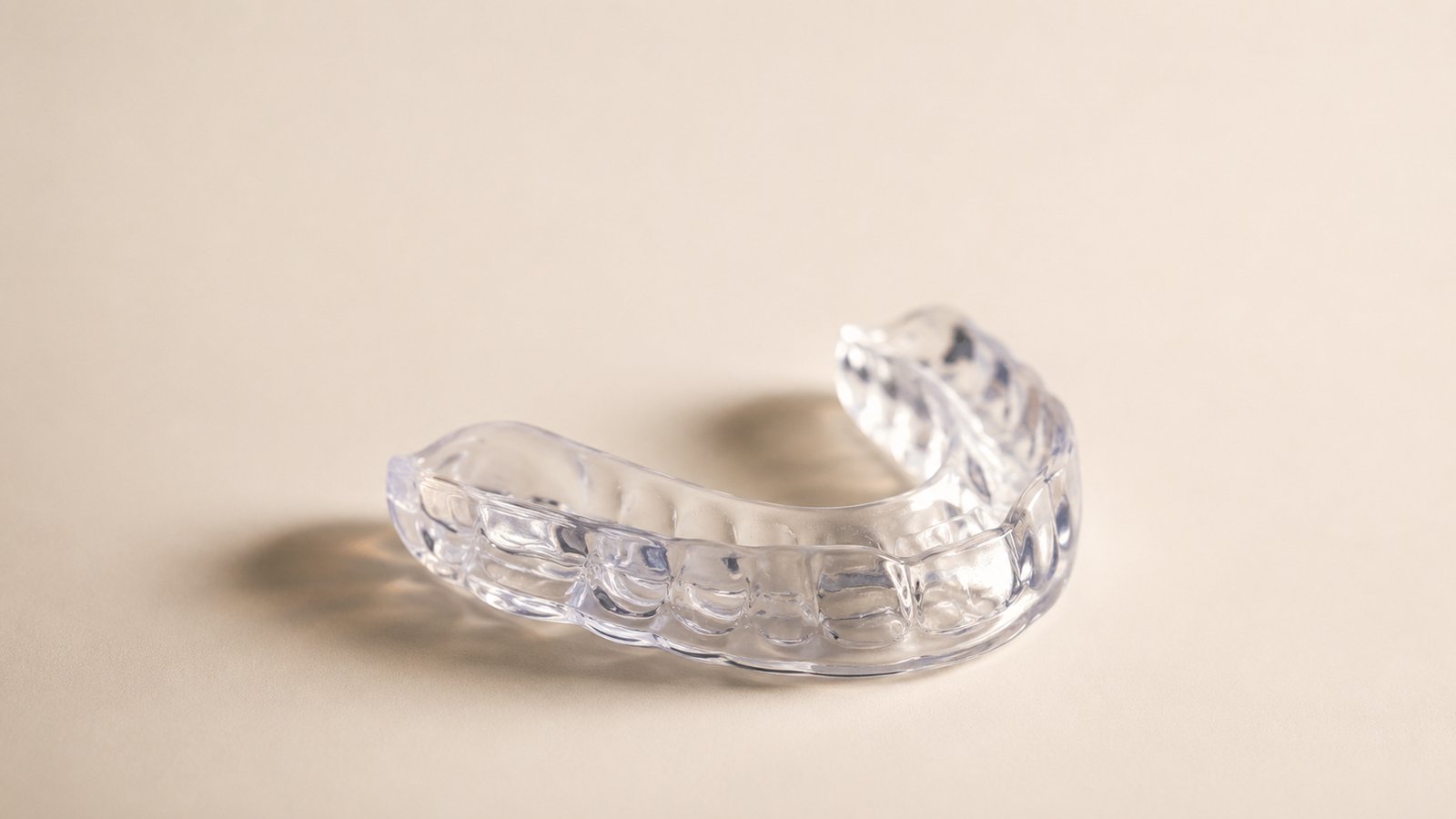
First: a breaking guard is information
A night guard that cracks, splits or wears through isn't just an annoyance — it's a measurement. It tells you the force your jaw generates at night exceeds what that guard was built to take. Bite forces in severe bruxism are extraordinary — among the strongest forces the human body produces — and they're applied for hours, night after night, concentrated through small contact points on a few millimetres of material. Most guards were never engineered for that.
The usual reasons guards break
The material was wrong for your force. Soft guards are comfortable but heavy grinders chew through them — sometimes in weeks. Some grinders actually clench harder against a soft surface. Standard hard acrylics resist wear far better, but under extreme, repeated load a single-material plate fatigues and eventually fractures, usually at its thinnest point.
The guard was too thin or badly fitted. Boil-and-bite guards and cheap mail-order trays fit loosely, so force concentrates at a few contact points instead of spreading across the plate. Stress concentration is how materials fail — a poorly fitted guard breaks faster than the same material properly fitted.
Your bruxism is genuinely severe. For a minority of grinders, force output is simply beyond what standard appliances tolerate. If you've broken more than one properly made hard guard, you're likely in this group — and it matters, because it changes both the appliance you need and the clinical conversation you should be having.
What breaking guards means for your teeth
Here's the part worth taking seriously: the guard is the sacrificial layer. Every crack in a plate is a force that would otherwise have gone into enamel, restorations, or the jaw joint. People who break guards are exactly the people who most need one that survives — going without, or limping along with a cracked plate, hands those forces back to your teeth.
What actually works at this level
Three things, honestly ranked. First, a guard engineered for the force — reinforced constructions exist precisely because standard single-material plates have a ceiling. Second, address the muscle — at plate-breaking force levels, muscle-level treatment through a clinician is a genuine option worth discussing, because reducing the force is even better than surviving it. Third, review the inputs — sleep-disordered breathing, stimulants, medication side effects and stress all drive severe bruxism, and any assessment should screen for them.
Built for the plates-breakers
The Ultra Plate is our strongest, longest-lasting build — a reinforced construction developed in our clinics for people whose grinding breaks standard guards. Every order individually dentist-reviewed.
Meet the Ultra Plate →When to seek care instead of self-treating: if your jaw locks or clicks painfully, if headaches are new, severe or worsening, or if you've had recent facial trauma, see a clinician first. Our consultation screens for exactly these and will route you to clinical care rather than sell you a device.